
Foil Lid vs Cardboard Lid vs PET Dome Lid for Food Containers
Choosing the right lid is as important as choosing the right container. The closure determines whether a meal survives transport, whether it can be reheated, how it looks on a shelf, and how your packaging performs against recycling and food-contact requirements. For foodservice operators, caterers, meal-prep brands, and private-label buyers, the three most common closures for aluminum and prepared-food containers are the foil lid, the cardboard (paperboard) lid, and the PET dome lid. Each solves a different problem, and each has clear limits.
This guide compares the three across the factors that matter most in procurement: temperature limits, product visibility, grease and moisture resistance, sealing method, transport durability, and recyclability. Use it to match a lid to your menu, your logistics, and your sustainability claims.
The three lid types at a glance
Before the detailed criteria, here is a quick orientation to how each closure behaves in real service conditions.
- Foil lids are aluminum board or laminated foil closures, usually crimped or heat-sealed onto a foil container. They are the workhorse for hot, oven-bound, and freezer applications.
- Cardboard lids are paperboard tops, often poly- or foil-lined, that snap or friction-fit onto the container rim. They offer a printable surface and a premium unboxing feel.
- PET dome lids are clear rigid plastic tops that give height for garnished or layered items and full product visibility. They are cold-side closures only.
Detailed comparison table
| Criterion | Foil lid | Cardboard lid | PET dome lid |
|---|---|---|---|
| Temperature range | Freezer to conventional oven; broadly stable from roughly -40°C up to about 220°C (validate with supplier) | Fridge and ambient; poly-lined grades tolerate warm fill but are not oven closures | Cold and chilled only; softens and deforms with heat. Never place in an oven |
| Oven-safe | Yes, with the matching foil container | No — remove before heating | No — remove before heating |
| Product visibility | None (opaque) | None (opaque, but printable) | Full, crystal-clear view |
| Grease resistance | Excellent | Good only with poly/foil lining; bare board wicks grease | Excellent (non-absorbent) |
| Moisture / leak resistance | High when heat-sealed or crimped | Moderate; depends on fit and lining | Moderate; snap fit resists splash, not full liquid seal |
| Sealing method | Crimp, fold, or heat-seal | Friction/snap fit or tuck | Snap-on friction fit |
| Stackability / transport | Excellent; rigid and crush-resistant | Good; flat top stacks well | Fair; domed profile reduces stacking efficiency |
| Branding surface | Limited (emboss or label) | Excellent print area | Label or in-mold only |
| Recyclability | Aluminum widely recyclable if clean; laminates vary | Recyclable if unlined; poly/foil linings complicate it | PET recyclable in principle; local acceptance and cleanliness vary |
Temperature limits and reheating
Temperature capability is the single biggest differentiator. A foil lid paired with a foil container moves seamlessly from freezer to conventional oven, making it ideal for ready meals, bake-off items, and hot catering trays. Always confirm the exact upper limit and any microwave guidance with your supplier, because laminates and coatings change the rating.
Cardboard and PET dome lids are not heating closures. Poly-lined cardboard handles warm fill and short holding, but it should be removed before any oven use. PET dome lids are strictly cold-side: they soften and lose shape with heat. As a rule for your teams and your on-pack instructions, plastic and PET lids should never go in the oven — remove them and reheat the food in an oven-safe container only.
Visibility and merchandising
If a customer buys with their eyes — salads, layered desserts, garnished bowls, grab-and-go — the PET dome lid wins outright with its clear, high-profile view. Cardboard lids trade visibility for a premium printed surface, which supports branding and a closed, protected presentation. Foil lids are opaque and functional; pair them with a printed sleeve or label when shelf appeal matters. Explore closure-and-base pairings across the full product range to match visibility with your merchandising goals.
Grease and moisture resistance
Oily and saucy menus punish the wrong closure. Foil lids resist grease and, when crimped or heat-sealed, deliver strong leak protection — the reason foil containers with lids dominate curries, roasts, and saucy mains. PET domes are non-absorbent and shrug off grease, but a snap fit resists splash rather than sealing liquids, so they suit drier or chilled items. Cardboard is the variable: poly- or foil-lined board performs well, while bare board wicks grease and softens. Specify the lining explicitly when quoting.
Sealing method, transport, and durability
Sealing method drives both security and speed on the line. Foil lids crimp, fold, or heat-seal for a tamper-evident, transport-ready close — well matched to round foil containers for soups and curries and to rectangular foil containers for trays and bakes. Cardboard lids use a friction or tuck fit that is quick to apply and stacks flat. PET domes snap on fast and protect tall contents, but the domed profile reduces stacking density and adds pallet height, which affects transport economics for high-volume delivery.
- Best for hot delivery and stacking: foil lids, thanks to rigidity and crimp/heat sealing.
- Best for flat stacking and branding: cardboard lids.
- Best for tall, garnished, or layered chilled items: PET dome lids.
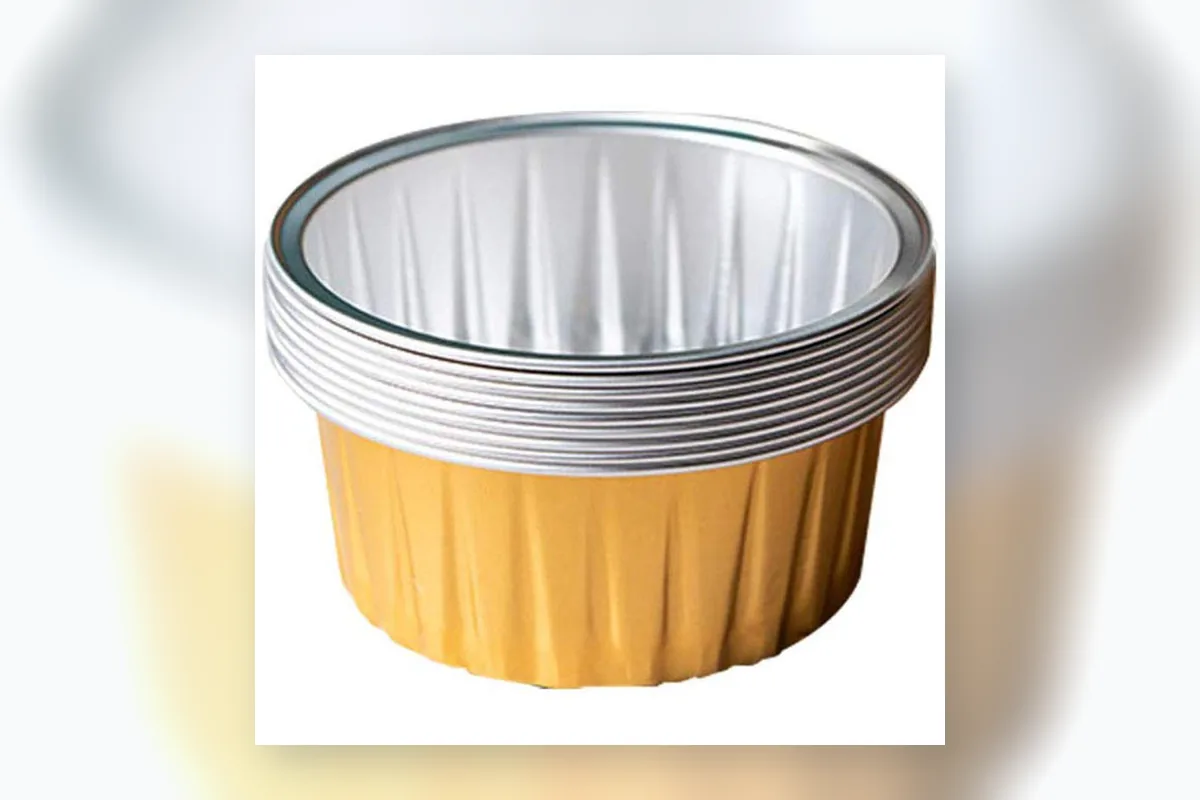
For portion desserts, muffins, and set items, matched bases such as baking foil cups and molds pair neatly with either a foil closure for bake-and-store or a dome for a chilled, visible finish.
Recyclability caveats and validation
Recyclability claims deserve care. Clean aluminum foil is widely recyclable, but food residue and mixed laminates can disqualify it — scrape and rinse where local streams require it. Unlined paperboard recycles well, yet poly and foil linings that make cardboard grease-resistant often move it into non-recyclable or specialist streams. PET is recyclable in principle, but acceptance depends on local infrastructure, color, and cleanliness. Do not print a recycling claim without validating it against the disposal reality of your destination markets, and align on-pack messaging with local rules.
How to validate before you commit
- Request full material and coating specs, including temperature ratings and food-contact compliance for your region.
- Run a transport and reheat trial with your actual menu, fill temperature, and delivery times.
- Confirm recyclability against the specific waste streams in your target markets, not generic labels.
- Check stacking, pallet height, and line speed for the chosen sealing method.
Frequently asked questions
Can I put a PET dome lid or plastic lid in the oven?
No. PET dome lids and plastic lids are cold-side closures that soften and deform with heat. Remove them before heating and reheat food only in an oven-safe container, such as a foil container with a matching foil lid.
Which lid seals best against leaks for saucy foods?
A crimped or heat-sealed foil lid gives the strongest leak protection for saucy and oily dishes. Poly-lined cardboard offers moderate protection, and PET domes resist splash but are not designed as a full liquid seal.
Are foil lids recyclable?
Clean aluminum foil lids are widely recyclable, but food residue and mixed laminate constructions can affect acceptance. Rinse where required and validate recyclability against your local streams before making any on-pack claim.
Match the lid to your menu
There is no single best lid — only the best lid for the job. Choose foil for hot, oven-bound, and freezer applications where sealing and durability matter; cardboard for branded, flat-stacking, ambient or chilled presentation; and PET domes for cold, visible, tall or garnished items. Validate temperature ratings, sealing performance, and recyclability against your real conditions before you scale. For spec sheets, samples, or help matching a closure to your containers, contact our team.
Looking for aluminum foil containers?
We supply food-grade aluminum foil containers for airlines, restaurants and food processors worldwide. Get a free quote today.
Get Free Quote → Browse Products