
Freezer-Grade vs Oven-Grade Foil Trays for Frozen Meals
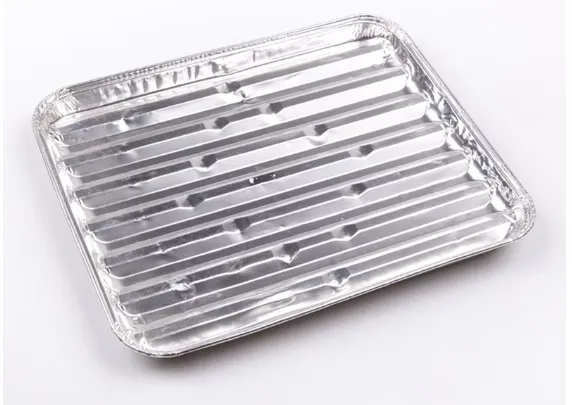
Freezer-Grade vs Oven-Grade Foil Trays for Frozen Meals: What B2B Buyers Must Know
When sourcing aluminum foil trays for frozen meals, one critical decision is choosing between freezer-grade and oven-grade materials. Many buyers assume all foil trays are interchangeable, but that misconception can lead to costly failures—like trays cracking in cold storage or buckling under oven heat. At Foil Container Factory, we produce both types using food-grade alloy 8011 or 3003, and we see the confusion firsthand. Let’s break down the differences, performance specs, and how to select the right tray for your application.

What Defines a Freezer-Grade Foil Tray?
Freezer-grade trays are designed to withstand temperatures as low as -40°F (-40°C) without becoming brittle or cracking. The key is the alloy composition and temper. Our 8011 alloy, for example, offers excellent ductility at low temperatures. We also use a thicker gauge—typically 0.04mm to 0.06mm—to provide structural integrity when the frozen meal is stacked or transported. A common mistake is using standard trays for frozen entrees; they often shatter when dropped from a pallet. For a 500ml frozen meal tray, we recommend a minimum thickness of 0.05mm. Freezer-grade trays often come with rolled edges for added strength, and some include a curl rim to fit a cardboard sleeve or lid.
What Defines an Oven-Grade Foil Tray?
Oven-grade trays must handle temperatures up to 450°F (232°C) without warping, leaking, or releasing harmful substances. Our trays are made from 3003 alloy, which has higher strength at elevated temperatures. The temper is typically H22 or H24—not too soft, not too hard. Wall thickness is critical: for a standard 8x6 inch baking tray, we use 0.06mm to 0.08mm. Thinner foil can buckle under the weight of a casserole. Oven-grade trays also need a reinforced rim to prevent distortion. Many buyers ask if they can use freezer trays in the oven. The answer: no. Freezer-grade alloys may soften too quickly, causing the tray to collapse. Always check the manufacturer’s spec sheet. Our oven-grade trays are tested to meet FDA 21 CFR 176.170 for food contact at high heat.
Key Performance Differences at a Glance
| Property | Freezer-Grade | Oven-Grade |
|---|---|---|
| Temperature range | -40°F to 212°F | -20°F to 450°F |
| Typical alloy | 8011 (O temper) | 3003 (H22/H24) |
| Recommended thickness (for 8x6 tray) | 0.04–0.06mm | 0.06–0.08mm |
| Rim style | Rolled or curled edge | Reinforced flat curl |
| Common lid type | Peel-off foil or plastic snap-on | Foil board or oven-safe plastic |
| Stacking strength | High (cryogenic impact) | Moderate (heat stability) |
| Cost per 1000 pieces (approx) | $18–$25 | $22–$30 |
Common Misconception: Dual-Purpose Trays
Some suppliers claim their trays are both freezer- and oven-grade. In our experience, that’s rarely true. A tray optimized for -40°F will have a different alloy temper and thickness than one for 450°F. Compromising on either end leads to failures. For example, a 0.05mm 8011 tray may survive freezing but will warp at 350°F. Conversely, a 0.07mm 3003 tray might crack at -20°F. The only true dual-purpose trays are those made with a special alloy like 3003 with an O temper, but they trade off performance at both extremes. We advise buyers to choose one primary use case and stick with it. If you need both, consider separate SKUs.
Choosing the Right Tray for Your Frozen Meal Line
Here’s a practical decision framework based on your product:
Frozen entrees (microwave-only): Use freezer-grade trays with a peel-off foil lid. Thickness: 0.05mm. Alloy: 8011.
Frozen meals with oven reheating: Use oven-grade trays. Thickness: 0.07mm. Alloy: 3003. Ensure lid is oven-safe (e.g., board lid with foil lining).
Airline meal containers: Typically oven-grade (reheated in convection oven). Need reinforced rim and tight-fitting lid. Custom sizes available.
Baking cups for frozen dough: Oven-grade with high rigidity. Thickness: 0.06mm.
Bulk frozen storage (no reheating): Freezer-grade, thicker gauge (0.06mm) for stacking.
Always request samples and test under your actual conditions. We offer free samples for qualified buyers—just provide your volume and specs.
Customization and Certifications
At Foil Container Factory, we produce both freezer- and oven-grade trays in custom shapes, sizes, and printing. Our factory spans 20,000 sqm with 12 automated lines, producing 800M+ pieces annually. We export to 50+ countries. All our food-grade trays meet FDA, HACCP, GMP, ISO 9001, ISO 14001, and ISO 50001 standards. For oven-grade trays, we specifically test to FDA 21 CFR 176.170. Standard MOQ is 50,000 pieces per design, but we can negotiate for custom molds. Need a tray that works from -40°F to 450°F? We can develop a custom alloy blend—just ask.
Frequently Asked Questions
Can I use a freezer-grade tray in a conventional oven?
No. Freezer-grade trays are not designed for oven heat. They may warp, leak, or release aluminum into food. Always check the temperature rating on the packaging.
What is the minimum thickness for an oven-grade tray?
For a standard 8x6 inch tray, we recommend 0.06mm. Thinner trays may buckle under heavy loads or high heat. For larger trays, increase thickness to 0.08mm.
Do you offer trays with lids for both freezer and oven use?
Yes. For freezer trays, we supply peel-off foil lids or plastic snap-on lids. For oven trays, we offer oven-safe board lids with foil lining or high-temperature plastic lids. All lids are custom-fit to your tray dimensions.
Looking for aluminum foil containers?
We supply food-grade aluminum foil containers for airlines, restaurants and food processors worldwide. Get a free quote today.
Get Free Quote → Browse Products