
How to Choose Aluminum Foil Container Thickness and Weight
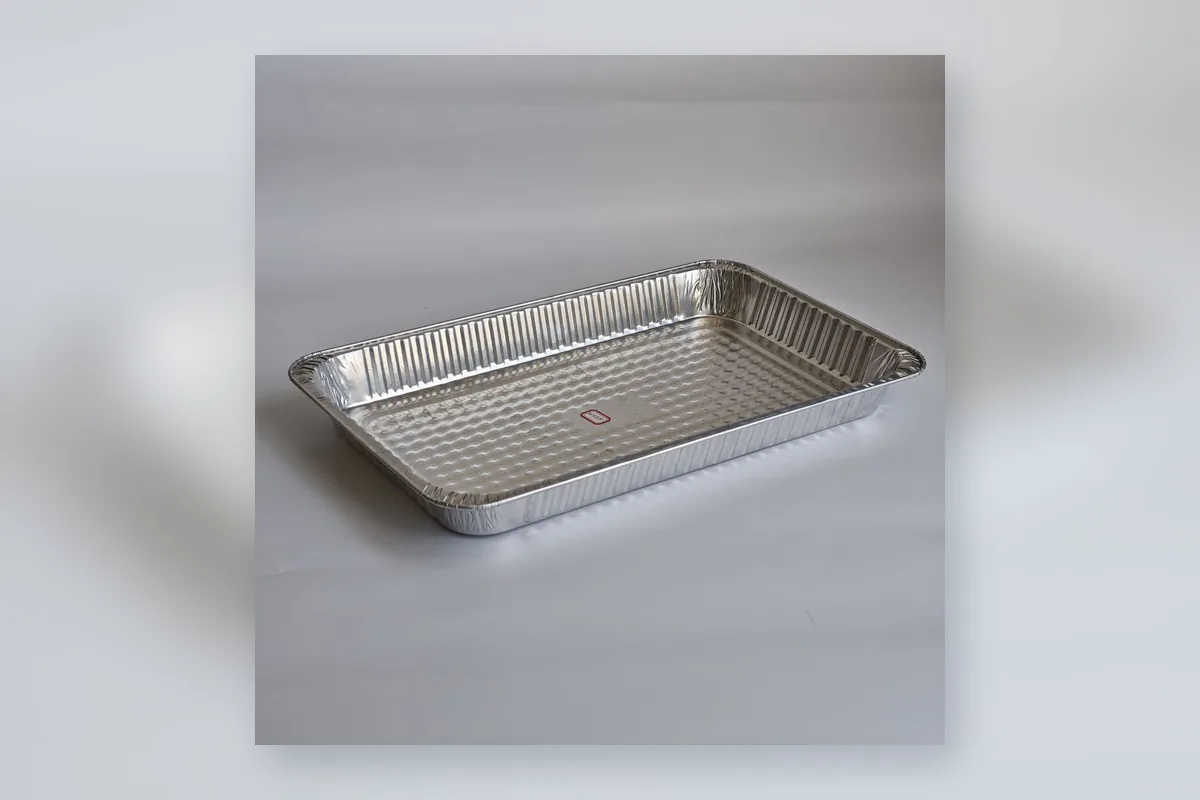
Buyers often reduce foil container selection to a single question: what gauge is it? Gauge (thickness) matters, but on its own it is a weak predictor of whether a tray will survive filling, stacking, transit, and reheating without denting, buckling, or leaking. Two containers of identical thickness can perform very differently depending on alloy, geometry, and how they are handled in your line. This guide explains how to specify thickness and weight the way experienced packaging and foodservice teams do—by treating them as one input among several, then validating the choice against your real product and supply chain.
Why Gauge Alone Is Not Enough
Thickness is usually reported in microns (µm) or as foil gauge, and weight is often expressed in grams per container. These numbers are convenient because they are easy to compare on a quotation. The problem is that structural performance—rigidity, dent resistance, and seal integrity—depends on how the metal is shaped and tempered, not just how much of it is present.
A thin container with a well-engineered rib pattern and a rolled, reinforced rim can outperform a thicker container with a flat wall and a weak edge. Likewise, a heavier gauge in a soft temper may crush more easily than a lighter gauge in a harder temper. If you specify only microns and grams, you leave the most important performance drivers unstated, and different suppliers may deliver very different products against the "same" spec.
The Variables That Actually Determine Performance
- Alloy and temper: Common food-grade foil alloys (for example 8011 and 3003 families) differ in strength and formability. Temper designation controls stiffness and springback, which affects dent resistance and how well a lid crimps.
- Geometry and depth: Deeper walls, tapered sidewalls, and corner radii change how load is distributed. A deep rectangular tray behaves differently from a shallow round one at the same gauge.
- Rib and wall design: Vertical ribs and stacking beads add rigidity and prevent nesting jams, letting you use less metal for the same stiffness.
- Rim construction: A curled or safe-edge rim resists deformation, improves board-lid or film sealing, and protects handlers from sharp edges.
- Fill weight and product type: A dense, hot, saucy fill loads the base and walls far more than a light dry product, so the container must be matched to the heaviest realistic fill.
- Lidding and sealing method: Board lids, foil lids, heat-seal film, and clip-on domes each place different demands on the rim and flange.
A Practical Decision Framework
Rather than starting from a target micron figure, start from the job the container has to do, then let thickness and weight fall out of those requirements. The table below maps common use cases to the attributes that should drive your specification.
| Use case | Primary risk | What to prioritize | Container style to evaluate |
|---|---|---|---|
| Takeaway and delivery meals | Dents, spills, and lid pop-off in transit | Reinforced rim, secure lid fit, adequate wall rigidity | Round or rectangular trays with matched lids |
| Bakery and desserts | Base sag and appearance | Flat, stable base and clean rim for presentation | Shallow round or rectangular containers |
| Ready meals and catering | Heavy or saucy fills, oven reheating | Higher rigidity, deeper walls, reliable sealing flange | Rectangular trays, often with heat-seal film |
| Inflight and travel catering | Tight galley tolerances, stacking, thermal cycling | Dimensional consistency, stackability, oven and chiller compatibility | Standardized airline trays |
| Bulk and long-haul distribution | Compression from stacking and vibration | Stacking beads, transit-tested strength, palletization fit | Ribbed containers with tight lid systems |
For everyday takeaway service, many operators evaluate round foil containers for soups, curries, and sides, while portioned mains and bakery items are often better suited to rectangular foil containers that pack efficiently and present cleanly. When lid security is the main failure mode, specifying foil containers with matched lids as a system—rather than sourcing bases and lids separately—removes most fit and leakage problems.
Match the Spec to the Fill, Not to a Catalogue Number
The single most useful step is to define your worst-case fill: the heaviest, hottest, wettest product the container will ever hold, at the maximum fill line your staff actually use. Specify thickness and weight against that scenario, then confirm the base does not sag and the walls do not bow when the container is lifted by the rim while full. This is where geometry and rim design earn their keep, and where a slightly lighter but better-engineered container frequently wins.
Validate With Handling and Transit Testing
Numbers on a datasheet do not tell you how a loaded, lidded container behaves after a delivery run. Before you commit to a specification and volume, run practical checks that mirror your operation:
- Fill-and-lift test: Fill to the real maximum, apply the lid, and lift by the rim. Watch for base sag, wall bow, and lid release.
- Stack and compression test: Stack filled units as they will be stored and transported, and hold for a realistic dwell time to check for crushing.
- Vibration and drop simulation: Recognized protocols such as ISTA transit-testing series are designed to simulate distribution hazards; using them, or an equivalent, gives repeatable evidence rather than anecdote.
- Thermal cycling: If containers are chilled then reheated, test through the full temperature range with the actual lidding to confirm the seal and metal hold up.
Document the results so your specification captures alloy, temper, dimensions, rib and rim details, target weight, and the tests passed. That record makes requalification and supplier changes far safer, because you can compare like with like.
Why Numeric "Rules of Thumb" Can Mislead
It is tempting to adopt a universal figure—"always use X microns for takeaway." Avoid this unless the number is tied to a specific alloy, temper, geometry, fill, and validated test result. A value that works for a shallow round side dish may fail for a deep rectangular ready meal with a heavy sauce. Treat any single number as valid only within the context it was proven, and requalify when the product, fill, or distribution model changes.
Working With a Manufacturer to Optimize Cost and Performance
Once you know your worst-case fill, handling profile, and lidding method, an experienced manufacturer can help you trade metal for engineering—using ribs, rim design, and the right alloy and temper to hit your performance targets at the lowest justifiable weight. For high-volume or specialized programs, an OEM and ODM partner can develop custom tooling, dimensions, and stacking features rather than forcing your product into a stock shape. For demanding, tightly toleranced applications like travel catering, purpose-built airline foil trays illustrate how standardized dimensions and stackability can matter as much as raw thickness.
If you are unsure which combination fits your product and distribution network, share your fill weight, container dimensions, lidding method, and shipping conditions with a technical team and ask for samples to test in your own line. You can start that conversation through the contact page and request specification support before committing to volume.
Authoritative references
Frequently Asked Questions
Is a thicker foil container always stronger?
No. Thickness contributes to strength, but rigidity and dent resistance also depend on alloy, temper, wall depth, rib design, and rim construction. A lighter container with good geometry and a reinforced rim can outperform a heavier, flat-walled one. Compare validated performance under your real fill, not gauge alone.
How do I choose the right thickness for my product?
Start from your worst-case fill—the heaviest, hottest, wettest load at your true maximum fill line—and your handling and transit conditions. Select containers that pass a fill-and-lift, stacking, and transit test for that scenario, then record the alloy, temper, dimensions, rim, and weight that passed. Requalify when the product or logistics change.
What information should I give a supplier for an accurate recommendation?
Provide fill weight and food type, internal and external dimensions, wall depth, required lidding or sealing method, reheating requirements, and your storage and shipping conditions (stack height, pallet pattern, transit distance). With this, a supplier can propose alloy, temper, geometry, and weight, and supply samples for you to validate.
Looking for aluminum foil containers?
We supply food-grade aluminum foil containers for airlines, restaurants and food processors worldwide. Get a free quote today.
Get Free Quote → Browse Products