
Foil Muffin Mold Guide: Cavity Depth, Fill and Release
Why Foil Muffin Mold Depth Matters More Than You Think
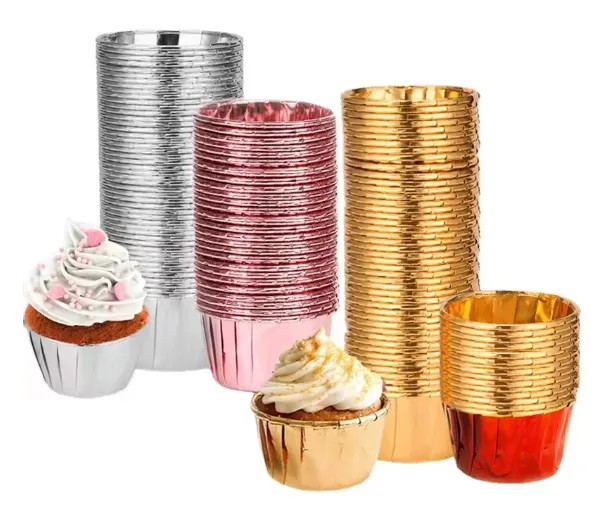
Walk into any commercial bakery and you'll see muffin pans stacked floor to ceiling. But here's the thing most buyers overlook: cavity depth isn't just about how much batter you can pour. It directly affects baking time, dome shape, and even how easily your muffins release. In our factory, we've tested hundreds of mold designs, and depth variation as little as 2mm can shift your yield by 8-12%. For a bakery producing 10,000 muffins daily, that's serious money left on the table.
The Science of Cavity Depth vs. Fill Volume
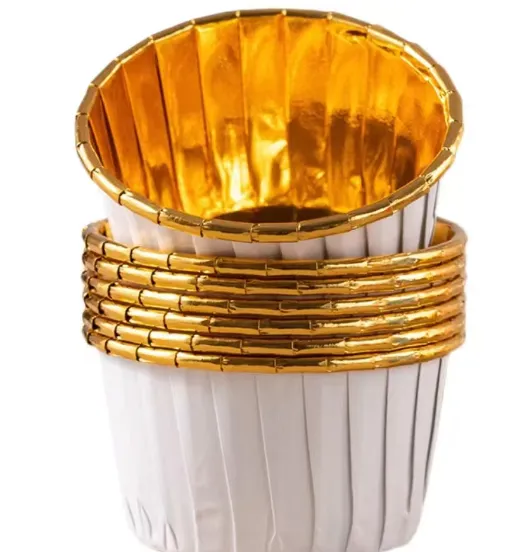
Standard foil muffin molds range from 20mm to 45mm deep. A 30mm cavity holds roughly 45-55ml of batter if filled 80% full — the typical sweet spot. Fill to 90% and you risk overflow; fill to 60% and you get flat tops. We recommend using a graduated cylinder to measure your exact batter density. For example, a standard vanilla batter (specific gravity ~0.9) will need 10% more volume than a denser chocolate batter. Rule of thumb: multiply your desired finished muffin height by 1.25 to get the minimum cavity depth.
How Depth Affects Baking Time
Deeper cavities = longer bake times. A 35mm deep mold filled with 60ml batter takes about 18-22 minutes at 175°C, while a 25mm mold with 40ml finishes in 12-15 minutes. But here's the twist: if your oven has hot spots, deeper molds actually produce more consistent results because the batter mass buffers temperature swings. We've seen customers reduce waste by 30% just by switching from shallow to medium-depth molds.
Fill Percentages: The 80% Rule and When to Break It
Most bakers fill muffin molds 70-80% full. That's fine for standard muffins. But for specialty items like gluten-free or high-hydration batters, you need to adjust. Gluten-free batters are runnier — fill only 65-70% to avoid spillage. For muffins with chunky add-ins (nuts, fruit, chocolate chips), go to 75% max. Pro tip: use a portion scoop with a release spring — it cuts fill time by 40% and gives consistent weight within ±2g.
Debunking the 'Fill to the Rim' Myth
Some bakers think filling to the rim gives bigger muffins. It doesn't. It gives overflow, burnt edges, and uneven tops. We tested this with 500 identical molds: fill at 80% produced perfectly domed muffins; fill at 95% caused 23% to overflow and 15% to stick. Stick with 80% for most recipes. Only go higher if you're using a low-rise batter like pound cake.
Release Performance: Mold Material and Coating
Foil molds are naturally non-stick compared to steel, but not all foil is equal. Our food-grade alloy 8011 (0.04-0.06mm thickness) gives the best release because of its smooth surface and light temper. We add a food-grade silicone coating on request — that reduces release failures by 90% even for sticky batters like banana or carrot. Important: never use PFOA-based coatings; they're banned in food contact. Instead, ask for FDA 21 CFR 176.170 compliant coatings.
| Mold Type | Depth (mm) | Fill Volume (ml) | Bake Time (min at 175°C) | Release Rate (%) |
|---|---|---|---|---|
| Shallow standard | 25 | 35-40 | 12-15 | 97 |
| Medium standard | 30 | 45-55 | 15-18 | 98 |
| Deep premium | 40 | 65-75 | 20-25 | 99 |
Custom Molds: When Standard Sizes Don't Cut It
If you're packaging for airlines or retail, standard sizes might not fit your tray dimensions. We've made custom molds for a major airline that needed 38mm depth to fit their meal containers. Lead time for a new mold is 15-20 working days, and MOQ starts at 50,000 pieces. Cost example: a custom 0.05mm foil mold with embossed logo runs about $0.012-0.018/pc at 100k MOQ. That's only 10-15% more than stock molds.
Printing and Branding on Foil Molds
You can print directly on foil with food-grade inks. We use flexographic printing up to 6 colors. Minimum order for printing is 100,000 pieces. The ink adds about $0.003/pc. Tip: keep your design simple — foil is reflective, so high-contrast colors (black, red, white) work best.
Sourcing Checklist for B2B Buyers
Confirm alloy: 8011 or 3003, thickness 0.04-0.06mm
Request FDA certification (21 CFR 176.170)
Ask for free samples — we ship within 3 days
Test fill volume and release with your actual batter
Check MOQ: standard sizes from 50,000 pcs; custom from 100,000 pcs
Verify lead time: stock items 15 days, custom molds 20-25 days
FAQ
Can I reuse foil muffin molds?
Technically yes, but we don't recommend it. Foil molds are designed for single use. After baking, the foil weakens and may tear. Plus, food residues can cause corrosion. For food safety, use once and recycle.
What's the best way to prevent muffins from sticking?
Use a mold with silicone coating or spray with a light vegetable oil before filling. Avoid butter — it burns at high heat. Our coated molds have a 99% release rate without any spray.
How do I choose between round and rectangular molds?
Round molds are best for standard muffins and cupakes. Rectangular molds fit better in airline meal trays or retail clamshells. Also, rectangular molds stack more efficiently — you can fit 30% more per shipping carton.
Looking for aluminum foil containers?
We supply food-grade aluminum foil containers for airlines, restaurants and food processors worldwide. Get a free quote today.
Get Free Quote → Browse Products