
What the EU Packaging and Packaging Waste Regulation Means for Food Packaging Buyers
For companies that source food-contact packaging, the European Union has moved from a directive to a directly applicable rulebook. The Packaging and Packaging Waste Regulation (PPWR), formally Regulation (EU) 2025/40, is now adopted law across the single market. It replaces the long-standing Packaging and Packaging Waste Directive 94/62/EC and, because it is a regulation rather than a directive, its core requirements apply the same way in every Member State without national transposition. For buyers of trays, containers, lids, films and foil formats, that means a single set of expectations, but also a tighter timeline for evidence and design changes. This article explains what is settled, what is still being defined, and what belongs on your due-diligence list.
What the PPWR is, and its current legal status
The PPWR entered into force on 11 February 2025 and will generally apply from 12 August 2026. Two distinctions matter for planning. First, the regulation itself is adopted and binding today; the 12 August 2026 date is when most obligations begin to bite, with several specific duties phased in later. Second, a number of technical details, such as the exact methodology for assessing recyclability and for calculating recycled content, are left to delegated and implementing acts that the European Commission still has to publish. In practice, the headline obligations are fixed, while some measurement rules and thresholds will be finalized closer to their application dates.
Key dates at a glance
| Date | Milestone (subject to related acts where noted) |
|---|---|
| 11 Feb 2025 | PPWR entered into force |
| 12 Aug 2026 | General application begins; PFAS limits in food-contact packaging apply |
| 31 Dec 2026 | Commission to adopt implementing acts on recycled-content calculation and verification |
| 1 Jan 2029 | Deposit-and-return systems for single-use plastic beverage bottles and metal beverage containers |
| 1 Jan 2030 | Recyclability grades A/B/C, first recycled-content minimums, and 50% maximum empty-space ratio (each subject to related delegated/implementing acts) |
| 1 Jan 2035 | "Recycled at scale" recyclability requirement |
| 1 Jan 2040 | Higher recycled-content minimums |
What changes for food-contact packaging
PFAS limits in food-contact packaging
From 12 August 2026, food-contact packaging may not be placed on the EU market if it contains per- and polyfluoroalkyl substances (PFAS) at or above the limit values set in the regulation, unless another Union act already prohibits it. The thresholds in the text are 25 ppb for any single PFAS (targeted analysis, polymeric PFAS excluded from quantification), 250 ppb for the sum of PFAS, and 50 ppm for PFAS including polymeric substances; where total fluorine exceeds 50 mg/kg, suppliers must be able to substantiate the figure on request. The Commission is required to evaluate, by 12 August 2030, whether this restriction should be amended to avoid overlaps with other chemicals legislation. For buyers, PFAS is an early, hard deadline that affects coatings, greaseproof treatments and release layers.
Recyclability by design
From 1 January 2030 (or a later date tied to the relevant delegated and implementing acts), packaging generally must be designed for recycling and meet recyclability performance grades A, B or C. A further "recycled at scale" test applies from 1 January 2035. Extended-producer-responsibility fees are to be modulated by recyclability grade, so design choices will increasingly influence unit economics, not just compliance.
Recycled content in plastic packaging
The recycled-content minimums apply to the plastic parts of packaging, calculated as an average per manufacturing plant and year, using post-consumer plastic waste. The core targets are:
| Plastic packaging type | From 1 Jan 2030 | From 1 Jan 2040 |
|---|---|---|
| Contact-sensitive PET (except single-use beverage bottles) | 30% | 50% |
| Contact-sensitive non-PET (except single-use beverage bottles) | 10% | 25% |
| Single-use plastic beverage bottles | 30% | 65% |
| Other plastic packaging | 35% | 65% |
Certain items are excluded, including immediate pharmaceutical packaging, packaging for medical and in-vitro diagnostic devices, packaging for infant and young-child food and food for special medical purposes, and plastic parts making up less than 5% of a unit's weight. The 2030 dates are anchored to "1 January 2030 or three years after the implementing act on the calculation methodology, whichever is later," so the measurement rules and the deadline are linked.
Minimisation and format restrictions
Two further measures affect everyday food packaging. From 1 January 2030, grouped, transport and e-commerce packaging must respect a maximum empty-space ratio of 50%. Separately, the regulation restricts specific single-use plastic formats, such as single-portion condiment and sauce sachets in hospitality settings, and requires take-away businesses to let customers bring their own containers at no extra cost. Union-wide packaging waste prevention targets are also set at 5% by 2030, 10% by 2035 and 15% by 2040, measured against 2018.
Where aluminium foil packaging fits
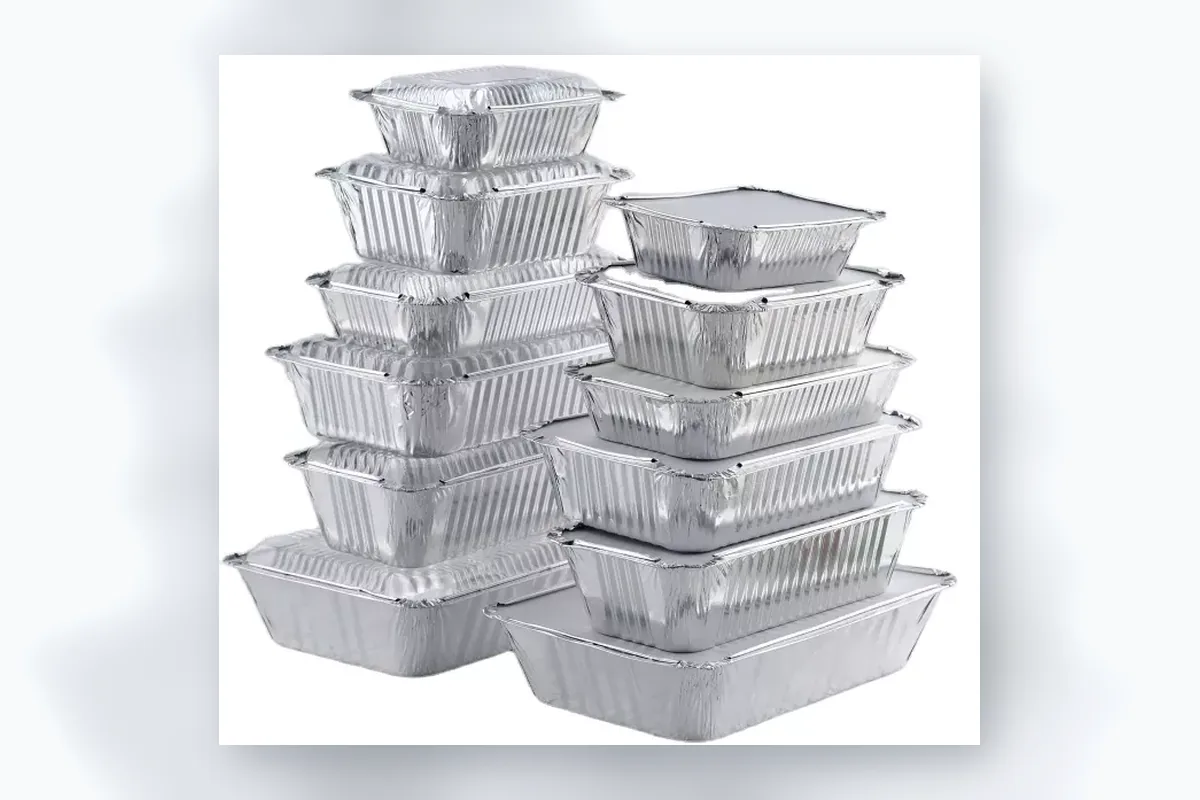
The recycled-content percentages above apply specifically to plastic parts, so mono-material aluminium foil containers and lids sit largely outside those particular quotas. That is not a free pass. Foil packaging still has to meet the recyclability, minimisation, PFAS and substance-of-concern requirements, and any plastic film, laminate layer or coating used with foil can bring plastic-side obligations into play. Aluminium's strong recyclability is an advantage under the design-for-recycling logic, but the composition of laminates, coatings and lidding films is exactly where buyers should focus their scrutiny. Reviewing material structures early with your supplier's food packaging solutions team helps you separate compliant mono-material options from composite formats that may need redesign.
A practical due-diligence checklist for buyers
The following is general guidance, not legal advice. Use it to structure supplier conversations and internal reviews:
- Map your portfolio by material and format, and flag any food-contact items with coatings or greaseproof treatments for PFAS review ahead of 12 August 2026.
- Ask suppliers for PFAS test data and substantiation, and confirm which laboratory methods were used.
- Request a recyclability assessment against the A/B/C grading logic and identify composite structures that may require redesign.
- For plastic components, request a recycled-content roadmap toward the 2030 and 2040 minimums, with plant-level data.
- Check pack sizes and secondary packaging against the 50% empty-space rule.
- Keep technical documentation and certificates on file, and align procurement contracts with the phased dates.
Because several methodologies will arrive through delegated and implementing acts, treat compliance as a rolling program rather than a one-off project, and confirm specifics with qualified legal counsel for your markets.
How Foil Container Factory supports compliant sourcing
Buyers can shorten the path to compliant packaging by working with a manufacturer that documents material composition and testing. Explore mono-material aluminium foil food packaging products, discuss tailored structures through our OEM and ODM program, review available compliance and quality documentation on our certificates page, and contact our team to align specifications with the PPWR timeline.
Frequently asked questions
Is the PPWR already law, or is it still a proposal?
It is adopted law. Regulation (EU) 2025/40 entered into force on 11 February 2025 and generally applies from 12 August 2026. Some technical requirements are phased in later and depend on delegated or implementing acts that the Commission still has to publish.
Does the recycled-content requirement apply to aluminium foil packaging?
The recycled-content minimums in the regulation apply to the plastic parts of packaging, not to aluminium foil itself. Foil packaging must still meet recyclability, minimisation, PFAS and substance-of-concern rules, and any plastic layers or coatings can trigger plastic-side obligations.
When do the PFAS limits for food-contact packaging start?
From 12 August 2026, food-contact packaging cannot be placed on the EU market if it contains PFAS at or above the limit values set in the regulation, unless another Union act already prohibits it. Buyers should confirm PFAS testing and documentation with suppliers well before that date.
Official EU sources
- Regulation (EU) 2025/40 (PPWR), EUR-Lex: https://eur-lex.europa.eu/eli/reg/2025/40/oj/eng
- European Commission, Packaging and packaging waste: https://environment.ec.europa.eu/topics/waste-and-recycling/packaging-waste_en
This article is provided for general information about the EU Packaging and Packaging Waste Regulation and does not constitute legal advice. Verify current requirements and obtain professional advice for your specific products and markets.
Looking for aluminum foil containers?
We supply food-grade aluminum foil containers for airlines, restaurants and food processors worldwide. Get a free quote today.
Get Free Quote → Browse Products