
Are Aluminum Foil Containers Recyclable? A Practical Buyer Guide
"Are aluminum foil containers recyclable?" is one of the most common questions procurement teams, brand owners, and foodservice buyers ask before committing to a packaging format. The short answer is that aluminum is widely recyclable and can be recycled repeatedly, but acceptance is not automatic or universal. Whether a specific tray or container is actually captured and reprocessed depends on how it is used, how it is prepared, and where it is collected. This guide breaks down the practical factors so you can specify smarter, communicate accurately, and avoid overstated environmental claims.
The Short Answer, With the Right Qualifications
Aluminum is a permanent material: the metal itself does not degrade during recycling, so it can be remelted and reprocessed many times. That is why bare aluminum foil trays are among the more recyclable rigid food packaging formats available. However, recyclability is a system property, not just a material property. A container is only "recyclable" in a meaningful sense if a local collection program accepts it, sorting facilities can capture it, and end markets can reprocess it. For that reason, responsible buyers should describe foil containers as widely recyclable where facilities exist, rather than as universally or infinitely recyclable.
Two important cautions apply. First, aluminum is a metal, so it is not biodegradable or compostable, and it should never be marketed as such. Second, blanket claims like "100% recyclable everywhere" are difficult to substantiate because collection access varies by region. Precise, qualified language protects your brand and keeps you aligned with marketing-claims guidance.
What Determines Whether a Foil Container Actually Gets Recycled
Several variables decide whether a container moves from the bin to a new aluminum product. Understanding them helps you choose formats and write instructions that maximize real-world recovery.
Clean and Dry Condition
Food residue is the single biggest barrier to recycling foil containers. Facilities generally want packaging that is empty, clean, and dry. Heavily greasy or food-caked trays can be rejected or downgraded because contamination interferes with sorting and reprocessing, and it can spoil other recyclables in the same stream. A quick rinse or wipe to remove loose food dramatically improves the odds of acceptance. Communicating a simple "empty, rinse, and dry" instruction on packaging or spec sheets is one of the highest-impact steps a buyer can take.
Local Collection Differences
Curbside and drop-off programs differ significantly from city to city and country to country. Some accept foil trays and clean foil in curbside bins; others accept them only at drop-off points; a few exclude them entirely. Small, lightweight items can also fall through sorting equipment designed for cans. Because access is inconsistent, the accurate message for most markets is "recyclable where facilities accept aluminum foil packaging," paired with a prompt for customers to check locally.
Coatings, Laminates, and Lids
Bare aluminum trays are straightforward to recycle. Complications arise when containers include additional materials:
- Coatings and lacquers: Thin functional coatings are common and usually burn off during remelting, but heavy laminates can complicate reprocessing.
- Board or plastic lids: Many foil containers with lids pair an aluminum base with a paperboard or plastic lid. These are typically different materials and should be separated so each goes to the correct stream.
- Plastic film or windows: Mixed-material closures reduce recyclability unless the components separate cleanly.
When you specify a format, ask your supplier what the base and lid are made of, and whether the components separate easily for the consumer. Clear separation guidance is essential for lidded formats.
A Practical Recyclability Decision Table
Use the following table as a quick reference when evaluating a foil packaging format. Local rules always take precedence.
| Scenario | Typical Recyclability | What the Buyer Should Do |
|---|---|---|
| Bare foil tray, empty, clean, dry | Widely recyclable where aluminum is accepted | Label "empty, rinse, dry"; confirm local acceptance |
| Foil tray with grease or heavy food residue | Often rejected or downgraded | Instruct wipe/rinse before recycling |
| Foil base with paperboard lid | Recyclable if separated by material | Add "separate lid and base" guidance |
| Foil base with plastic lid or film | Base recyclable; lid varies | Separate components; check local plastic rules |
| Small or very lightweight foil pieces | May not be captured by sorting equipment | Recommend nesting/scrunching foil where local rules allow |
| Foil with heavy laminate or mixed layers | Reduced recyclability | Ask supplier for material breakdown before specifying |
Recycled Content vs. Recyclable: Two Different Claims
Buyers frequently conflate "recycled content" and "recyclable," but they are distinct concepts, and mixing them creates compliance risk.
- Recyclable describes what can happen at end of life, subject to local collection and processing.
- Recycled content describes what the product is made from, expressed as a percentage of pre-consumer or post-consumer material.
Both can be valuable in a sustainability story, but each must be stated accurately and, ideally, backed by documentation. If recycled content matters to your program, ask suppliers for percentages and supporting records, and review any relevant certificates that verify material and process claims. Explore the full range of formats and material options across the product portfolio so you can match performance requirements with the recyclability profile you want to communicate.
Substantiating Claims and Communicating With Buyers
Environmental marketing claims in the United States should follow the Federal Trade Commission's Green Guides, which caution against unqualified "recyclable" claims when facilities are not available to a substantial majority of consumers, and against unsubstantiated degradability claims. Practically, this means:
- Qualify recyclability by geography or facility availability rather than claiming it universally.
- Never label aluminum as biodegradable or compostable.
- Keep evidence for recycled-content percentages and any third-party certifications.
- Give consumers clear preparation and separation instructions.
For distributors and brand owners, consistent messaging matters as much as the packaging itself. Consider on-pack icons, spec-sheet notes, and customer-facing FAQs that mirror the qualified language above. If you need tailored formats, private-label guidance, or help aligning packaging with your sustainability messaging, our team can support you through the right packaging solutions, and you can contact us to review documentation for a specific product.
Buyer Best-Practice Checklist
- Specify bare or easily separable formats when recyclability is a priority.
- Add "empty, rinse, dry" and "separate lid and base" instructions on packaging.
- Confirm what the base, coating, and lid are made of before ordering.
- Distinguish recyclable claims from recycled-content claims in all materials.
- Qualify recyclability by local facility availability.
- Keep substantiation for every environmental claim you publish.
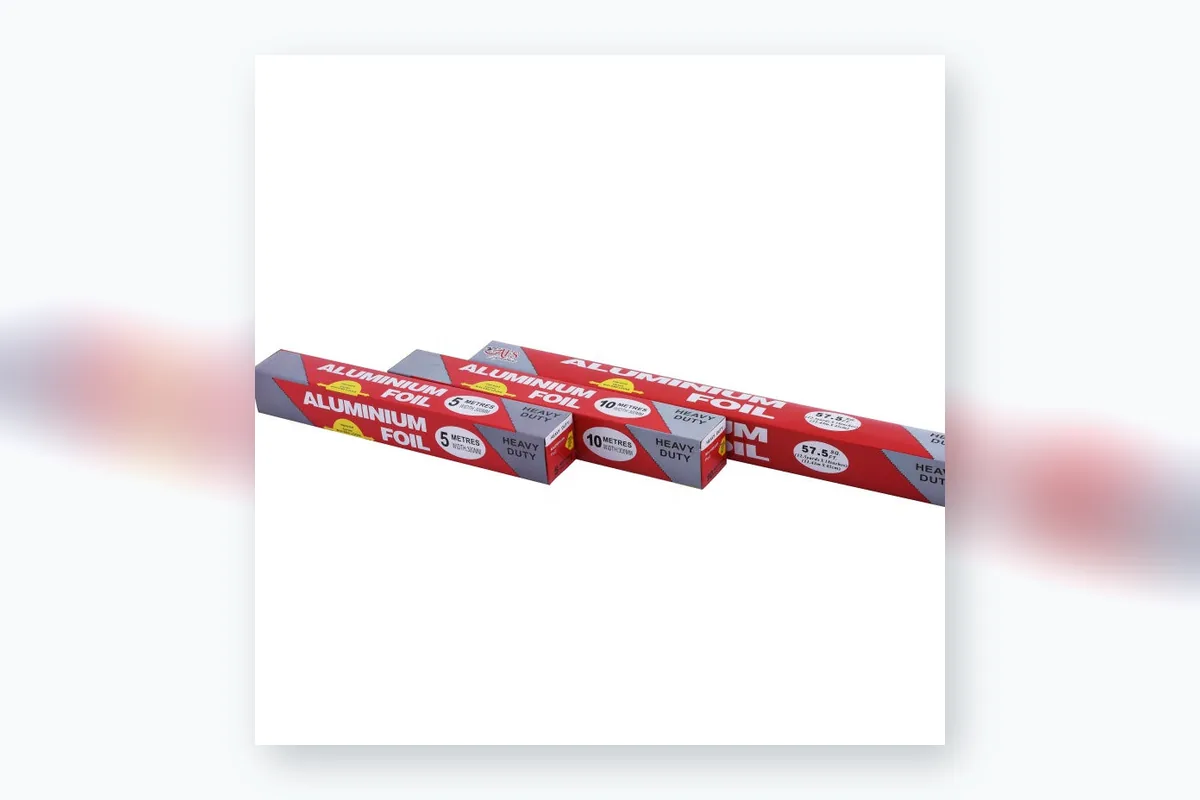
If you buy foil by the roll for portioning, wrapping, or lining, the same clean-and-dry principles apply to aluminum foil rolls: clean, dry foil is far more likely to be accepted than greasy foil.
Authoritative references
- U.S. Environmental Protection Agency
- U.S. Federal Trade Commission
- The Aluminum Association
- How2Recycle
Frequently Asked Questions
Are aluminum foil containers recyclable if they still have food on them?
Usually not in their soiled state. Most facilities want empty, clean, and dry packaging. Wipe or rinse off food residue first; heavily contaminated trays are often rejected or downgraded, so preparation directly affects whether a container is actually recycled.
Is aluminum infinitely recyclable?
Aluminum can be recycled repeatedly because the metal does not lose its essential properties during remelting. In practice, however, real-world recovery is limited by collection access, contamination, and sorting. It is more accurate to say aluminum is highly and repeatedly recyclable than to claim it is infinitely recyclable without qualification.
Can I recycle a foil container with a cardboard or plastic lid?
Often yes, if you separate the components. The aluminum base and a non-aluminum lid are typically different material streams. Detach the lid, follow local rules for each material, and provide clear separation guidance to your customers on lidded formats.
What is the difference between recyclable and recycled content?
"Recyclable" describes what can happen at end of life, subject to local facilities. "Recycled content" describes the percentage of recovered material used to make the product. Both are legitimate claims, but they must be stated separately and backed by evidence.
Sources
- U.S. Environmental Protection Agency, "Aluminum: Material-Specific Data" (https://www.epa.gov/facts-and-figures-about-materials-waste-and-recycling/aluminum-material-specific-data)
- U.S. Federal Trade Commission, "Guides for the Use of Environmental Marketing Claims (Green Guides), 16 CFR Part 260" (https://www.ftc.gov/legal-library/browse/rules/green-guides)
- The Aluminum Association, "Recycling" (https://www.aluminum.org/Recycling)
- How2Recycle, Labeling and Recyclability Guidance (https://how2recycle.info/)
Looking for aluminum foil containers?
We supply food-grade aluminum foil containers for airlines, restaurants and food processors worldwide. Get a free quote today.
Get Free Quote → Browse Products